


BER Certificate Dublin: Understanding the New BER Assessment Methodology and Energy Rating Scale
The way Non-Domestic BER Certificates are calculated in Ireland has fundamentally changed.
One of the biggest changes introduced under the updated BER methodology is that the traditional notional building comparison approach is no longer used to determine the BER rating.
Previously, a building's BER rating was largely based on comparing the actual building against a theoretical reference building known as the notional building.
Under the new methodology, the BER rating is determined using a different approach:
The building's calculated annual primary energy consumption is compared against fixed energy thresholds expressed in kWh/m²/year.
This means that the BER rating now represents the absolute energy performance of the building, rather than how well the building performs compared with a theoretical reference building.
The change affects all types of non-domestic buildings, including:
Offices
Schools
Hospitals
Retail buildings
Hotels
Industrial buildings
Public buildings
Each building type is assessed against its own energy performance thresholds because different buildings have very different operational requirements.
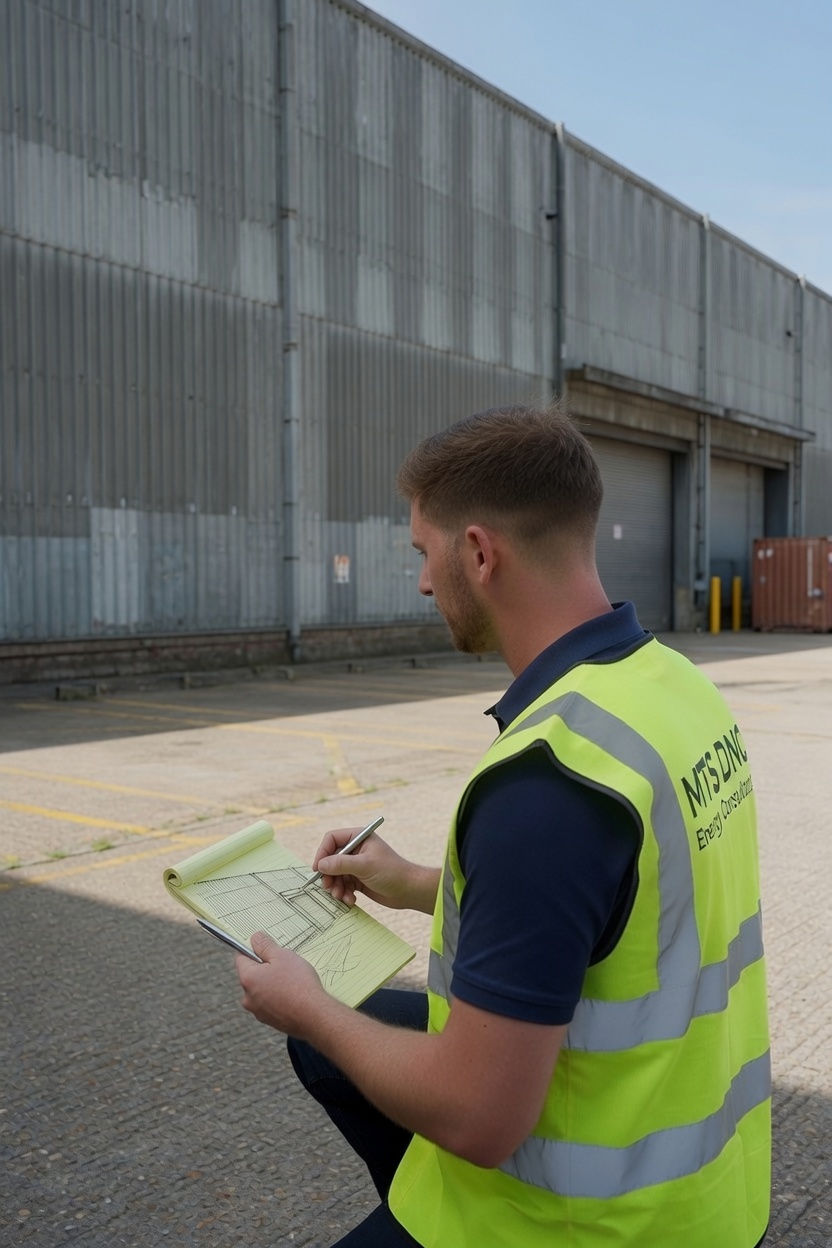
🏢 What Is a Non-Domestic BER Certificate?
A Non-Domestic Building Energy Rating (BER) Certificate provides an indication of the energy performance of a commercial or public building.
The assessment is completed using the Non-Domestic Energy Assessment Procedure (NEAP) methodology and approved software tools.
The calculation considers:
Space heating energy
Cooling energy
Ventilation energy
Lighting energy
Hot water generation
Renewable energy systems
Building controls
Building fabric performance
The result is a BER rating ranging from:
A0 – highest performance
to
G – lowest performance
The new BER certificate also provides additional information on energy use, renewable energy contribution and environmental performance.
🏗️ The Previous BER Methodology: Comparison Against a Notional Building
Historically, the BER rating calculation was based on comparing the actual building against a theoretical reference building.
This reference building was known as the notional building.
The calculation considered the relationship between:
Actual building energy performance
compared with
Notional building energy performance
The BER result was therefore a relative performance indicator.
A building could achieve a good rating if it performed better than the reference building, even though the actual energy consumption could vary depending on the building type and operation.
The notional building approach was useful for demonstrating compliance and benchmarking performance, but it did not directly communicate:
"How much energy does this building actually use?"
🆕 The New BER Methodology: Absolute Energy Performance
Under the updated methodology, the notional building comparison is no longer used to determine the BER classification.
Instead, the rating is based on:
Total Primary Energy Consumption
Measured in:
kWh/m²/year
The calculated energy use of the building is compared against predefined thresholds.
For example:
A building using very low amounts of primary energy will achieve a higher BER rating.
A building with higher energy consumption will achieve a lower BER rating.
The rating is therefore directly linked to the building's calculated energy intensity.
📊 Why Are Absolute kWh/m²/year Thresholds Better?
The new approach provides a clearer understanding of actual building performance.
A building owner can now better understand:
How much energy the building consumes
How efficient the building systems are
The impact of renewable energy
The potential for improvement
The BER rating becomes less about:
"How does this building compare against a theoretical building?"
and more about:
"How much energy does this building require to operate?"
🏥🏫🏢 Why Are BER Thresholds Different for Each Building Type?
A very important aspect of the new methodology is that there is not one universal kWh/m²/year threshold for all buildings.
A hospital cannot be compared against an office.
An office cannot be compared against a school.
A school cannot be compared against a retail unit.
Each building type has different:
Operating hours
Occupancy levels
Heating requirements
Ventilation requirements
Cooling requirements
Hot water demand
Internal energy loads
Therefore, the BER thresholds are adjusted according to the function of the building.
🏫 Example: School BER Thresholds
Schools typically operate:
During daytime hours
Mainly weekdays
With seasonal heating requirements
Their energy profile is influenced by:
Classroom heating
Lighting
Ventilation
ICT equipment
Occupancy levels
A school is therefore assessed against thresholds appropriate for an educational building.
🏥 Example: Hospital BER Thresholds
Hospitals have significantly different energy demands.
They typically operate:
24 hours per day
365 days per year
They require:
Continuous ventilation
Strict temperature control
High hot water demand
Medical equipment operation
Specialist environmental conditions
A hospital naturally requires more energy than many other building types.
The BER thresholds recognise this difference and are not the same as those applied to offices or schools.
🏢 Example: Office BER Thresholds
Office buildings have a different energy profile.
Typical energy drivers include:
Lighting
IT equipment
Cooling systems
Mechanical ventilation
Occupancy patterns
A modern office with efficient HVAC systems and controls may achieve a strong BER rating even though its energy use pattern is completely different from a school or hospital.
🛒 Example: Retail BER Thresholds
Retail buildings also have unique characteristics:
Customer operating hours
Display lighting
Refrigeration loads (where applicable)
Heating and cooling requirements
A retail building is therefore assessed against retail-specific energy thresholds rather than office or institutional thresholds.
⚡ How Does This Affect Energy Improvement Strategies?
The new BER methodology means that energy improvement strategies must be building-specific.
There is no single solution that improves every building type.
For example:
A school may achieve significant improvements through:
Heat pump installation
Improved insulation
Lighting upgrades
Better controls
A hospital improvement strategy may focus more on:
HVAC optimisation
Heat recovery
Ventilation efficiency
Energy management systems
An office may benefit from:
Efficient HVAC systems
LED lighting
Building management systems
Renewable electricity generation
The correct strategy depends on the building function and energy profile.
☀️ Renewable Energy Under the New BER System
Renewable technologies continue to contribute to BER improvements.
These include:
Solar PV
Heat pumps
Solar thermal
Battery storage
However, the impact depends on:
Building type
Electricity demand
Operating hours
Renewable energy utilisation
A hospital operating continuously may use a significant proportion of renewable electricity generated on site.
A smaller office building may export a greater proportion of PV generation.
The same renewable system can therefore have different BER impacts depending on the building it serves.
📍 BER Certificate and BER Assessment Services Across Dublin
MTS DNC Energy Consultants provide professional BER assessments and BER Certificates throughout Dublin and surrounding areas.
Our BER assessor services cover:
North Dublin Areas
Malahide, Portmarnock, Swords, Donabate, Lusk, Rush, Skerries, Balbriggan, Garristown, Ballyboughal, Naul, Oldtown, Loughshinny, Clontarf, Fairview, Marino, East Wall, Dollymount, North Strand, Raheny, Kilbarrack, Harmonstown, Edenmore, Donaghmede, Coolock, Artane, Whitehall, Santry, Drumcondra, Beaumont, Glasnevin, Griffith Avenue, Finglas, Ballymun, Dubber, Charlestown, Baldoyle, Bayside, Sutton and Howth.
South Dublin Areas
Ballsbridge, Donnybrook, Sandymount, Irishtown, Ringsend, Ranelagh, Rathmines, Rathgar, Harold's Cross, Terenure, Templeogue, Kimmage, Crumlin, Drimnagh, Walkinstown, Perrystown, Greenhills, Tallaght, Firhouse, Knocklyon, Ballycullen, Ballyboden, Whitechurch, Dundrum, Churchtown, Milltown, Clonskeagh, Goatstown, Stillorgan, Mount Merrion, Sandyford, Leopardstown, Ballinteer, Rathfarnham, Nutgrove, Blackrock, Booterstown, Monkstown, Deansgrange, Foxrock, Cabinteely, Cornelscourt, Killiney, Dalkey, Glenageary, Sallynoggin and Dún Laoghaire.
Dublin Surrounding Areas
Shankill, Loughlinstown, Ballybrack, Carrickmines, Stepaside, Ticknock, Kilternan and Enniskerry.
👷 Why Choose MTS DNC Energy Consultants?
At MTS DNC Energy Consultants, we provide specialist energy consultancy services including:
Commercial BER Assessments
Part L Compliance
Energy Audits
Renewable Energy Assessments
Building Energy Modelling
Our building services engineering background allows us to analyse how HVAC systems, renewable technologies and building operation influence energy performance.
👉 Contact us today for expert advice or to schedule your BER assessment.
For further inquiries or assistance, feel free to contact us.
Final Thoughts
The new Non-Domestic BER methodology represents a major change in how buildings are rated.
The traditional comparison against a notional building has been replaced with an approach based on:
Absolute primary energy consumption thresholds measured in kWh/m²/year.
The energy threshold is not the same for every building.
A hospital, school, office and retail building are assessed differently because they have different operational requirements.
The new BER methodology provides a more meaningful way of understanding building energy performance by focusing on the actual energy intensity of each building type.
For building owners, designers and consultants, understanding these changes is essential when planning energy upgrades, renewable installations and future compliance strategies.
Disclaimer:
The information provided in these posts is for informational purposes only and should not be considered design advice, specifications, or a calculation template. We assume no responsibility or liability for the use of the information presented. For professional advice or design services, please contact us via our contact form.


Comments